No. You can reach out directly, and we'll assess your condition to see what kind of physiotherapy support fits.



Home Visit Physiotherapy
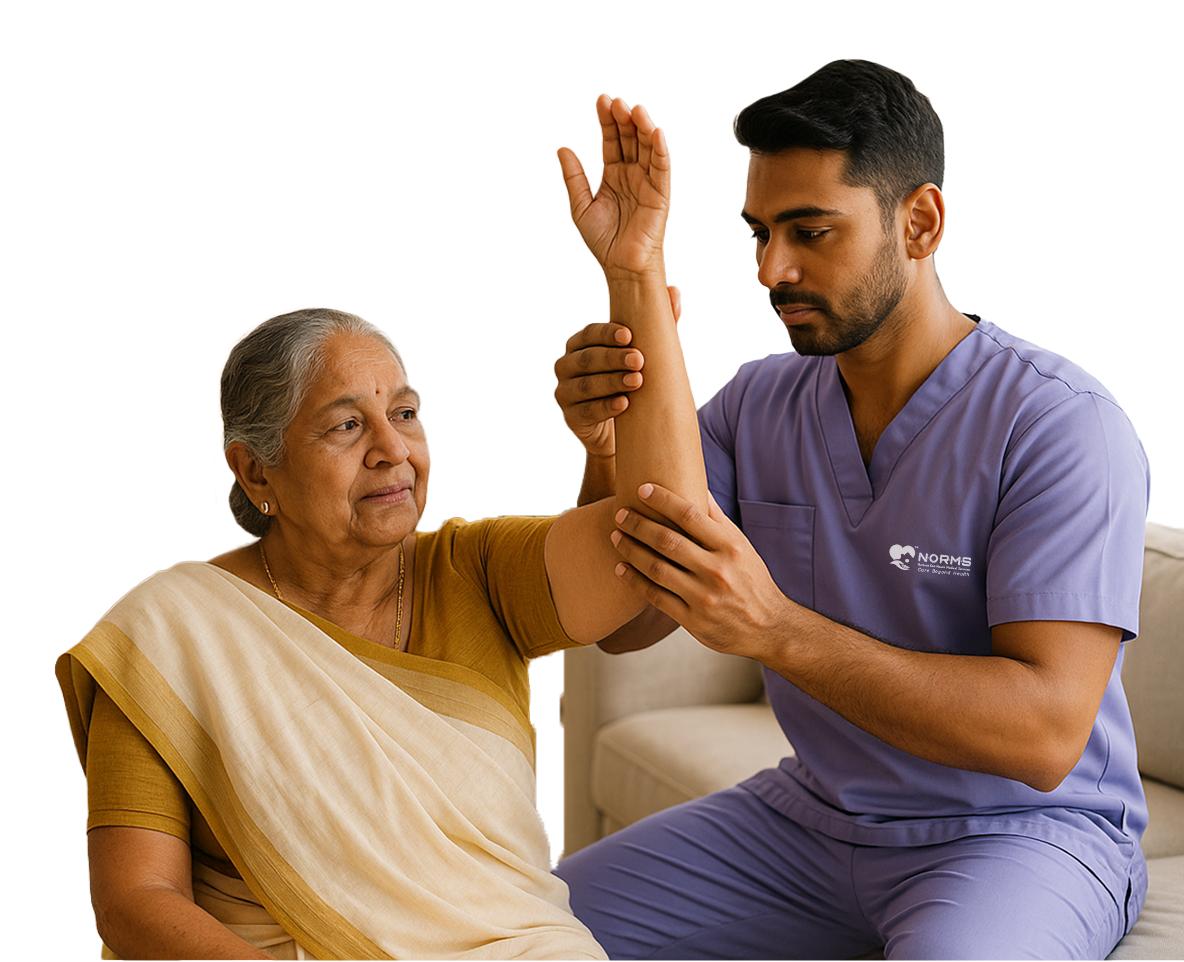
Recovery happens between sessions, not during them.
Which is why the plan matters more than the hour. We start with a conversation about what you're trying to get back to, then an assessment either at home, or over a call if that's simpler, and only then do sessions begin. What we build from that is shaped by your condition and your goal, whether that's walking to the gate unaided after a stroke, managing your own stairs again after a knee or hip replacement, or getting through a day without breathlessness after a cardiac or lung illness.
Some recoveries need more than one kind of work at once, mobility alongside a neurological condition, say. We keep that under a single plan, so you're not left coordinating between people who've never spoken to each other.
And it changes as you do. We review progress regularly and adjust because what helps in week two is rarely what you need by week eight, and the point of all of it is to get you steady enough not to need us.
Get in touch with us
How we Care For You

Geriatric Physiotherapy
Helping seniors move safely and stay steady on their feet.

Neurological Physiotherapy
Supporting recovery after stroke, Parkinson's, or nerve injury.

Cardio-Respiratory Physiotherapy
Helping you breathe easier after cardiac or lung illness.

Post-Operative Rehabilitation
Guiding safe, steady movement after surgery.

Personalised Exercise Programs
Built around your condition, not a template.
Mobility & Balance Training
Reducing fall risk, one session at a time.
Your plan is built around your condition, whether that means one of these specialties or a combination, and adjusted as you progress.
Testimonials
It's not until critical times that one realises the importance of intensive "home care." It was a godsend to have the NORMS team take care of every single detail, round the clock. I am deeply thankful to them.
Talk to us
+91 75501 01018
A Few Things Families Ask Us
How is home physiotherapy different from a clinic visit?
Your physiotherapist comes to you, works with your actual home environment, and gets to know your case over repeated visits, rather than treating each session as a one-off.
What if my condition needs more than one kind of physiotherapy?
That's common. Recovery from a stroke, for instance, may need both neurological and general mobility support. Your plan is built around what you actually need, not a single fixed category.
How often will sessions happen, and can that change?
Frequency depends on your condition and progress. Your physiotherapist reviews this regularly and adjusts the schedule as you improve or if your needs change.




