It depends on what the patient is recovering from. A hip surgery, a cardiac event, and a long ICU stay all need different things; some need more nursing, some need more physiotherapy, some need close medical monitoring. We work that out at the first assessment, not before.


Advanced Healthcare
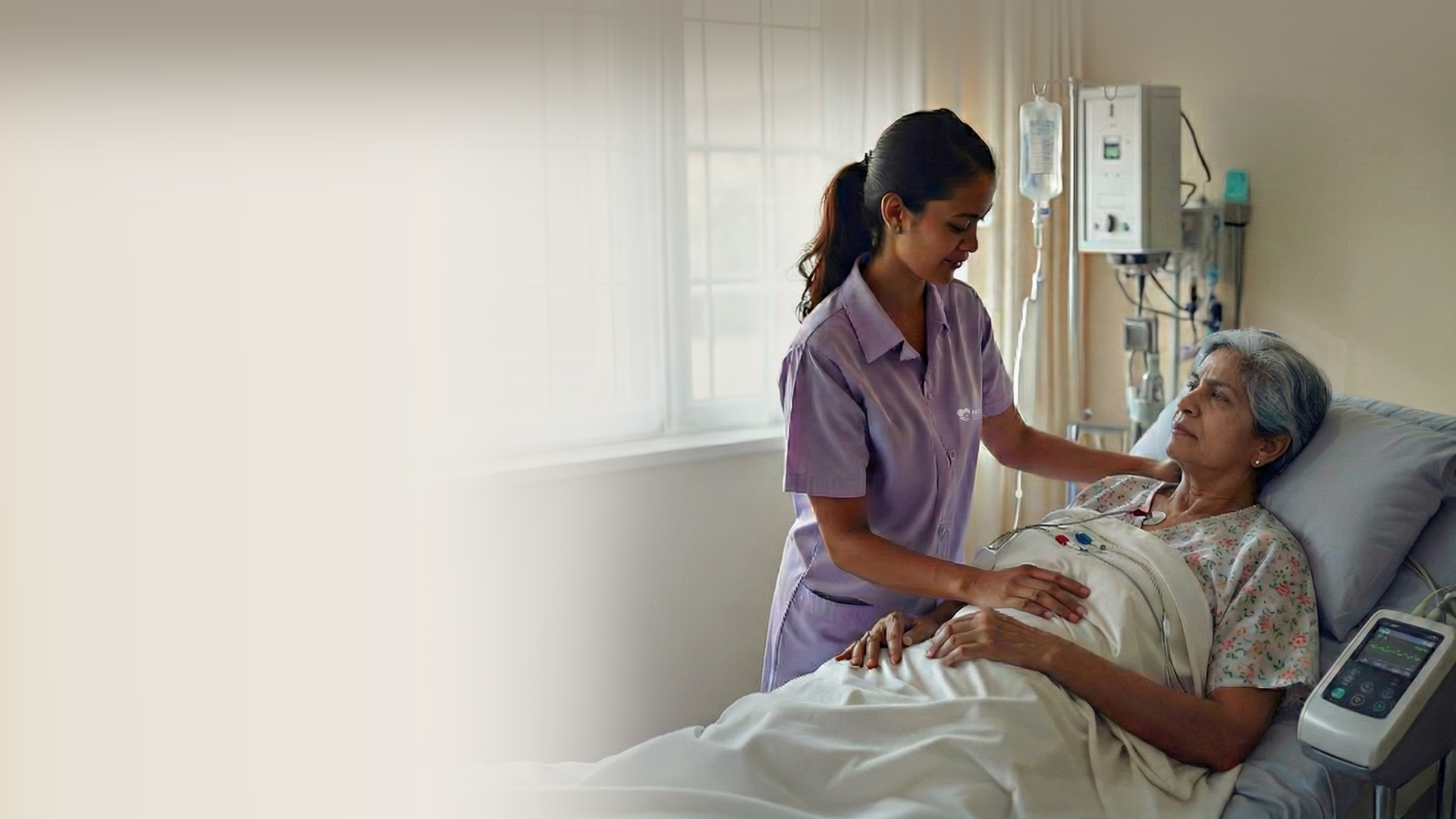
Coming home is the good news. Managing it is the part nobody prepares you for.
In the ward, someone was always watching. Then the discharge summary is in your hand, and the watching is yours: the medicines, the wound, the machine they showed you how to use once.
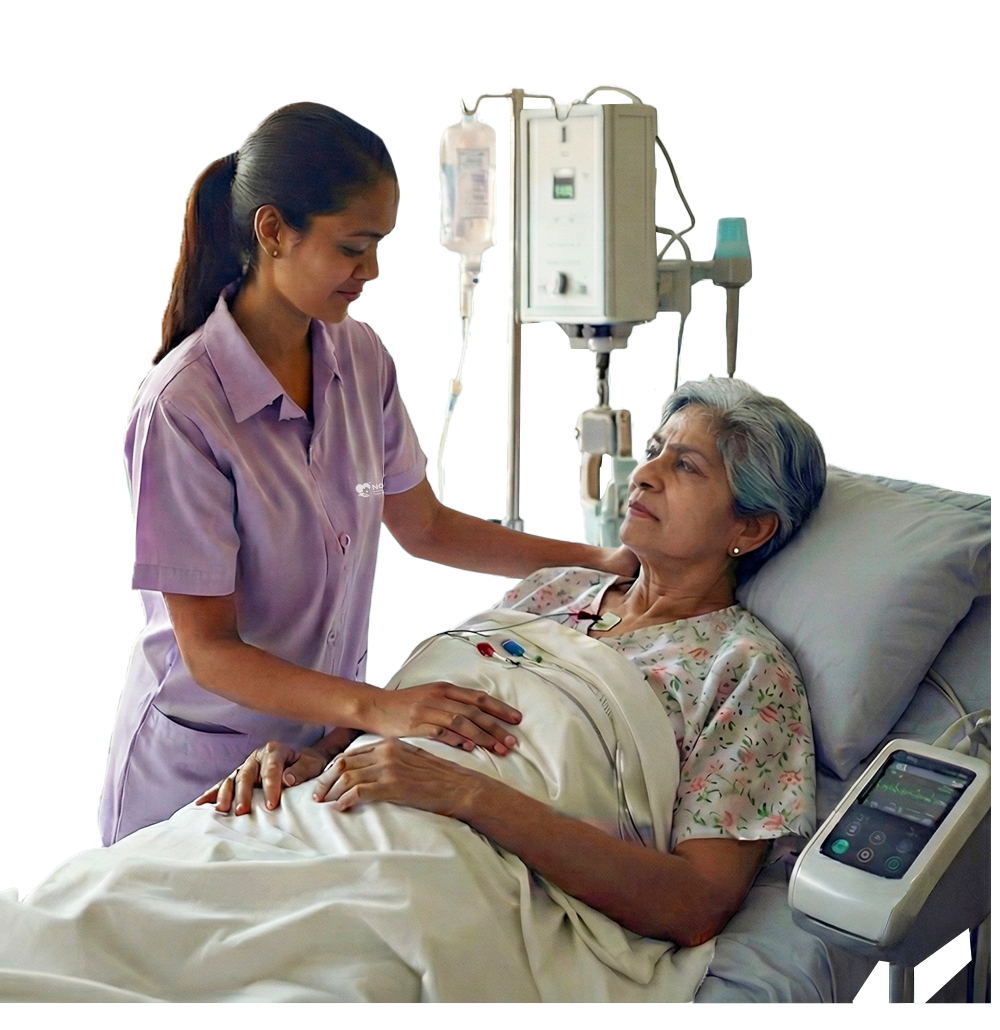
So before we put anyone in your home, our doctor comes and sees the patient himself. He reads what the discharge summary actually says, checks how the medicines are working together, and thinks about what's likely to go wrong in the next two weeks. Then he tells you what level of care that needs from an ICU-trained nurse who can manage a tracheostomy or a feeding tube, basic nursing for dressings and vitals, or sometimes less than you were bracing yourself for.
After that, it's the same people who keep coming. Nobody has to be told the history twice, and nobody misses the small change in your family member's condition that only shows up if you saw them yesterday. You'll know your coordinator's name before you see your first bill.
Get in touch with us
How We Care For You

24/7 Skilled Nursing Care
Round-the-clock support for complex recovery needs.

Specialist Doctor Visits
Medical judgement, brought directly home.

Physiotherapy at Home
Rebuilding strength and movement, step by step.

Palliative Therapy
Comfort-focused care alongside recovery.

Dietitian Consultation
Nutrition guidance to support healing.
Care continues from admission through recovery, with the same team staying close as your medical needs change at each stage. Clinical judgment guides every decision, not a fixed checklist.
Testimonials
I'm a doctor in Chennai, and for three years I've cared for my husband, who's on life support with motor neuron disease. The N.O.R.M.S team has given us home care that closely matches what he'd get in a hospital's critical care unit, calm, confident, and available 24/7, without fail.
They've gone beyond medicine too, helping us source the right equipment, nursing care, and physiotherapy at fair prices. Taking a loved one's care into your own hands after leaving hospital is frightening, N.O.R.M.S has made that possible, and I'm glad to see them grow.
We thank N.O.R.M.S for the option of home critical care, which is a boon for patients who wish to live in their homes and still get the best critical care.
Talk to us
+91 75501 01018
A Few Things Families Ask Us
How soon after discharge can care start?
As soon as the family needs it. Ideally, the plan is in place before discharge day, so there's no gap between leaving the hospital and getting settled at home.
Will the same nurse or coordinator stay on the case throughout recovery?
Yes. Continuity is central to how we work; the same coordinator and, wherever possible, the same care staff stay with the case, so nothing gets lost between visits.
What if the patient's condition changes mid-recovery?
The plan isn't fixed. Regular assessments mean we catch changes early and adjust; more nursing support, an added doctor visit, a change in therapy, without the family having to push for it.




